



A driving package can look like a simple way to save money, but the best automatic lesson package should do much more than bundle a set number of hours. For learners and parents, the real value is having a clear path from the first uncertain drive to safe, independent decisions on Perth roads and a calm, well-prepared Practical Driving Assessment.
Automatic lessons are a practical choice for many learners. They let you focus less on gear changes and more on the skills that affect safety every time you drive: observation, speed control, gap selection, road positioning and anticipating what other road users may do next. A good package gives those skills time to develop properly, rather than rushing towards a test date.
What makes the best automatic lesson package?
The right package depends on where a learner is starting. Someone who has never driven needs a different plan from a learner who has completed most of their supervised hours but continues to miss head checks, hesitate at roundabouts or lose control of their speed on downhill roads.
That is why the number of lessons alone should not decide it. Look for a package built around individual assessment and ongoing progress. Each lesson should identify a few clear priorities, explain why they matter, and give the learner enough repetition to correct them in real traffic conditions.
For parents, this approach provides reassurance. You can see that lessons are not simply a drive around the suburb. They are structured training with a purpose, delivered by an instructor who understands current WA road rules and what assessors look for during the PDA.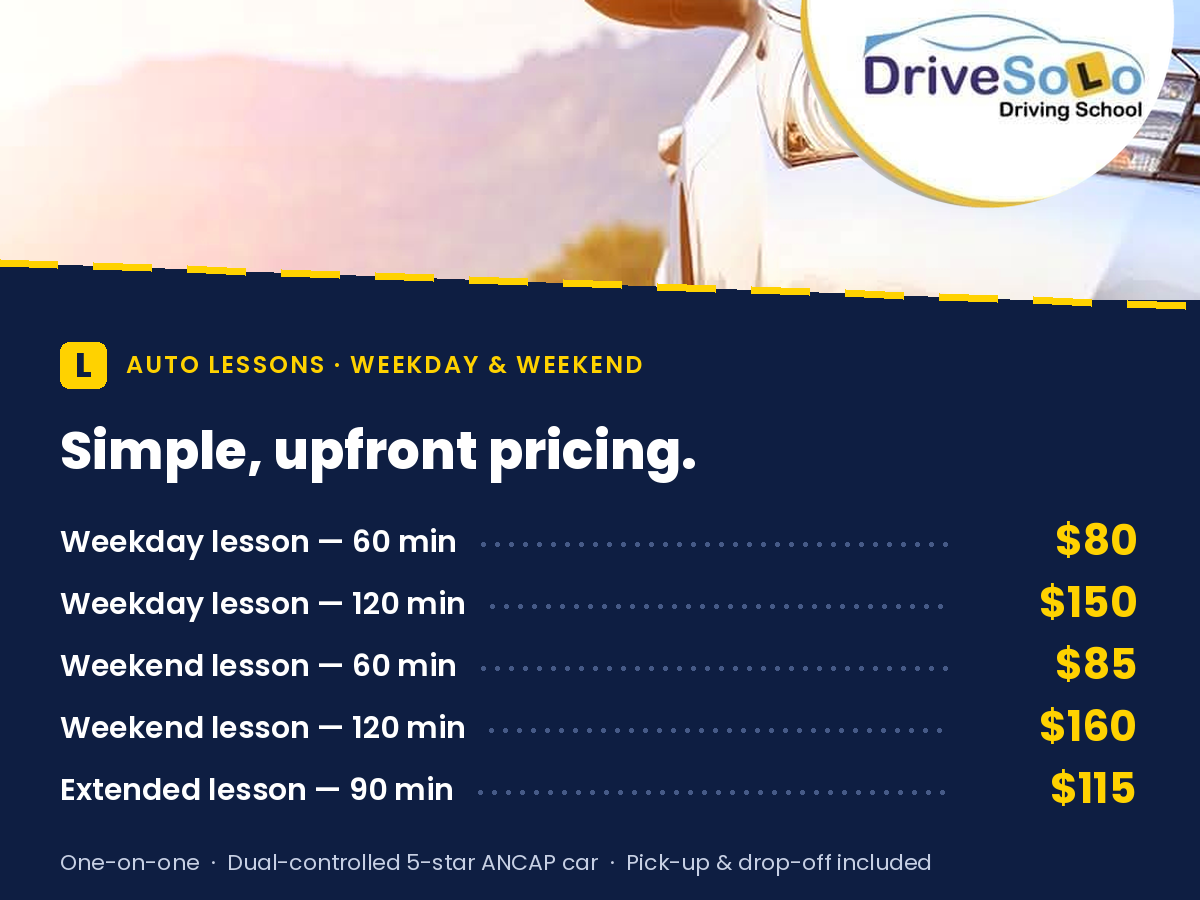
A package should match your current skill level
A beginner package should allow time for the foundations: setting up the seat and mirrors, smooth steering and braking, safe scanning, turning at intersections, giving way correctly and learning how the vehicle responds. Early lessons should be patient and unhurried. Confidence built too quickly on quiet streets can disappear when traffic, pedestrians and complex intersections are added.
An intermediate learner may need more targeted help. Perhaps they can drive comfortably with a parent but are inconsistent when changing lanes, approaching traffic lights or entering a busy roundabout. In this case, the best value often comes from a package that includes regular lessons close enough together for feedback to become a habit.
Test-ready learners usually benefit from focused assessment preparation rather than repeating skills they already perform safely. A professional instructor can identify small but costly errors, such as late indicator use, incomplete observations, poor lane choice or a missed school-zone sign. The aim is not to teach a memorised test route. It is to make safe decisions repeatable wherever the assessment takes place.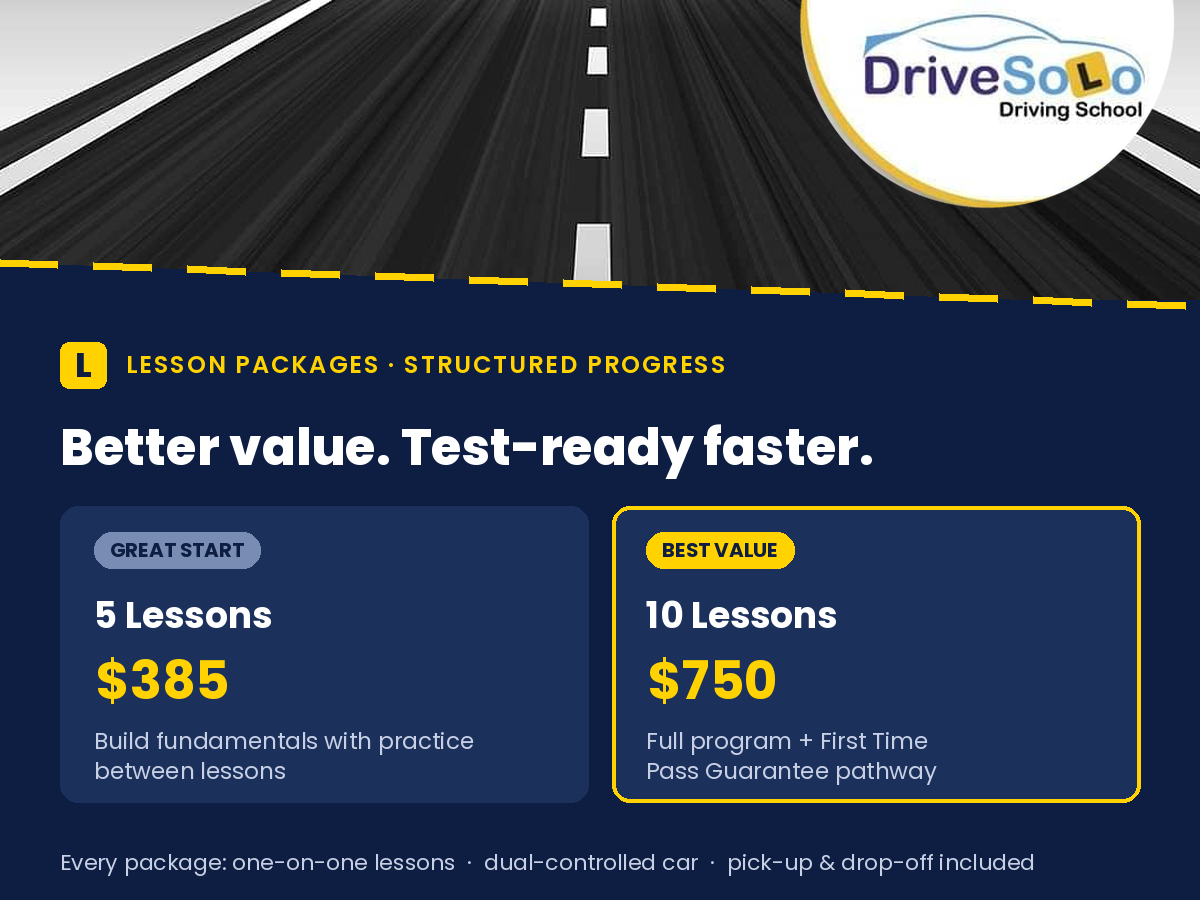
Check what is included before comparing prices
A lower package price does not always mean lower cost overall. Compare the full experience, including lesson duration, vehicle use, pick-up arrangements, insurance and test-day support. Transparent pricing matters because learners should be able to plan without discovering unexpected vehicle-hire or booking charges later.
At Drive Solo, automatic lessons are delivered in dual-control, 5-star ANCAP-rated, fully insured vehicles, with free pick-up and drop-off from home, school or work where available. These details matter. A dual-control vehicle gives the instructor a safety backup while a learner manages new situations, and convenient pick-up can make consistent lessons realistic for busy students, working adults and families.
It is also worth asking whether lesson time means a full 60 minutes of instruction or includes travel between learners. A full lesson gives more opportunity to practise the skills that take time: planning ahead, reading signs early and recovering calmly when conditions change.
For learners nearing their PDA, a complete test-day package can reduce avoidable stress. It may include a warm-up lesson before the assessment, use of a familiar vehicle, transport arrangements and insurance coverage. This does not guarantee a pass, and no responsible instructor should promise one. It does mean the learner can arrive prepared in a vehicle they know, rather than facing an unfamiliar car and last-minute logistics.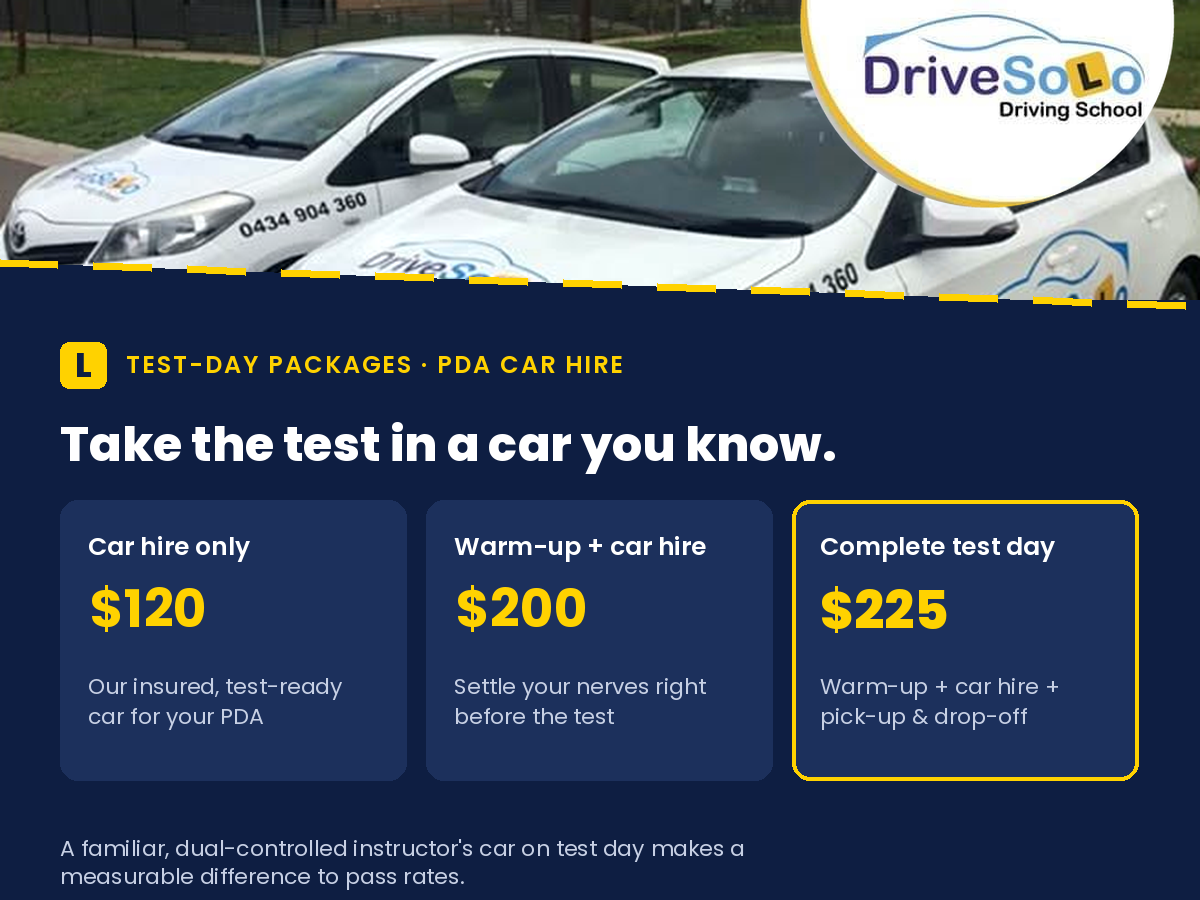
Instructor quality is part of the package value
A package is only as helpful as the person teaching it. Family practice remains valuable, but informal teaching can unintentionally pass on habits that are unsafe, outdated or not assessed correctly. A parent may be an experienced driver yet find it difficult to explain why a learner keeps drifting wide on turns or braking too late at a roundabout.
Look for a licensed, police-checked instructor who can give specific correction without making the learner feel embarrassed. The difference is in the detail. Instead of hearing “be more careful”, a learner should understand what happened, what they should have noticed earlier and what action to practise next time.
For example, a learner who repeatedly receives feedback about observation may not need to turn their head more dramatically. They may need a better routine: mirror check, indicator, head check, then move only when the space is safe. Clear coaching turns vague advice into a process the learner can use independently.
A patient instructor also knows when to stretch a learner and when to slow down. Night driving, wet-weather conditions and busier roads can be useful practice, but they need to be introduced when the learner has the basic control and confidence to benefit from them. More difficult conditions are not a shortcut. They are an opportunity to build judgement with professional support.
Choose progress tracking over guesswork
Many learners leave a lesson thinking it went well, only to be unsure what to practise before the next one. Progress reports help close that gap. They show what has been covered, what is improving and which skills need more attention.
This is especially useful when several people supervise practice. A parent, older sibling and professional instructor can otherwise give different advice, leaving the learner confused. A simple progress record creates a shared focus. If the current priority is smoother braking and earlier hazard recognition, home practice can reinforce those skills instead of introducing conflicting habits.
The best automatic lesson package should also be flexible enough to respond to progress. Some learners need fewer lessons than expected because they practise regularly and respond quickly to feedback. Others need extra time around particular skills, such as reverse parking, hill starts, merging or roundabouts. Safe driving is not a race to use every lesson in a package. It is about using each lesson where it will make the greatest difference.
Consider lesson timing and real-life practice
Consistency is more valuable than trying to fit several lessons into one stressful week before the test. A regular schedule gives learners time to practise between sessions, reflect on feedback and return with questions. However, the ideal frequency depends on availability, confidence and access to supervised driving outside lessons.
Weekday, weekend and night lessons can make training more accessible. A student with after-school commitments may need a weekend booking, while an adult learner working standard hours may need an evening session. For learners in Cockburn, Fremantle, Rockingham, Kwinana, Armadale and surrounding areas, convenient collection can also prevent lessons being delayed because transport is difficult.
When comparing packages, think honestly about how much private practice is available. If a learner has regular access to a suitable vehicle and a calm supervising driver, professional lessons can focus on correction and higher-risk scenarios. If private practice is limited, a larger lesson package may offer better continuity and confidence.
Questions worth asking before you commit
Before choosing a package, ask how the instructor assesses your starting level, whether feedback is recorded after each lesson, and what happens if you need to reschedule. Confirm that the quoted price includes the vehicle, fuel, insurance and any pick-up service offered.
If the PDA is approaching, ask how test-day support works and whether a warm-up lesson is included. Also ask whether lessons are adapted to the learner’s weak areas rather than following the same route every time. These answers reveal whether you are paying for meaningful instruction or simply buying driving time.
Be cautious of packages marketed only around a fast pass. Passing the PDA is an important milestone, but it is the beginning of solo driving, not the finish line. The learner who understands safe following distances, checks carefully before changing lanes and stays composed after a mistake is better prepared for the roads they will use after they receive their licence.
A well-chosen package should leave a learner with more than a booking confirmation and a test date. It should give them the confidence to pause, observe, make a safe decision and drive on with care when nobody is sitting beside them.
