



A lesson should not begin with a rushed lift to a meeting point or end with a learner trying to arrange a ride home. Driving lessons with pick-up that Perth learners can access from home, school or work make professional coaching easier to fit around real life – while keeping the focus where it belongs: building safe, independent driving habits.
For a learner driver, convenience matters. But the quality of instruction, the safety of the training vehicle and the instructor’s ability to explain mistakes clearly matter more. The right lesson gives a learner time to practise, understand what went wrong and repeat the correct action until it feels natural.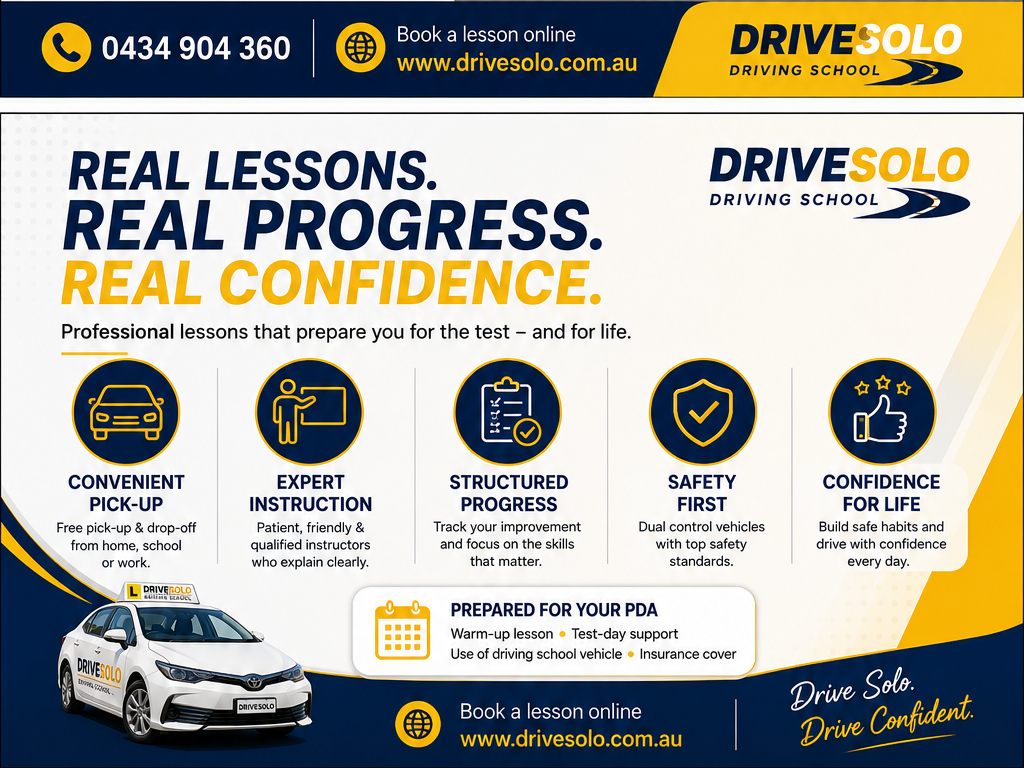
Why pick-up driving lessons make practical sense
Learners are often balancing school, TAFE, university, work and family commitments. Parents may be managing several children’s schedules as well. Free pick-up and drop-off removes one unnecessary barrier to regular practice, especially when lessons are booked before or after school, on weekends or in the evening.
It can also make the lesson more useful. Rather than driving only around one meeting point, a qualified instructor can structure practice around the roads a learner uses every week. That might mean quiet residential streets for early steering and observation practice, busier intersections as confidence develops, or a route near school or work where safe decision-making is needed.
For families in suburbs across Cockburn, Fremantle, Rockingham, Kwinana, Armadale and Cannington, that flexibility can mean fewer missed lessons and more consistent progress. Consistency is one of the biggest advantages a learner can have. Long gaps between drives often turn simple skills, such as checking mirrors before braking or selecting a safe gap, into things they need to relearn.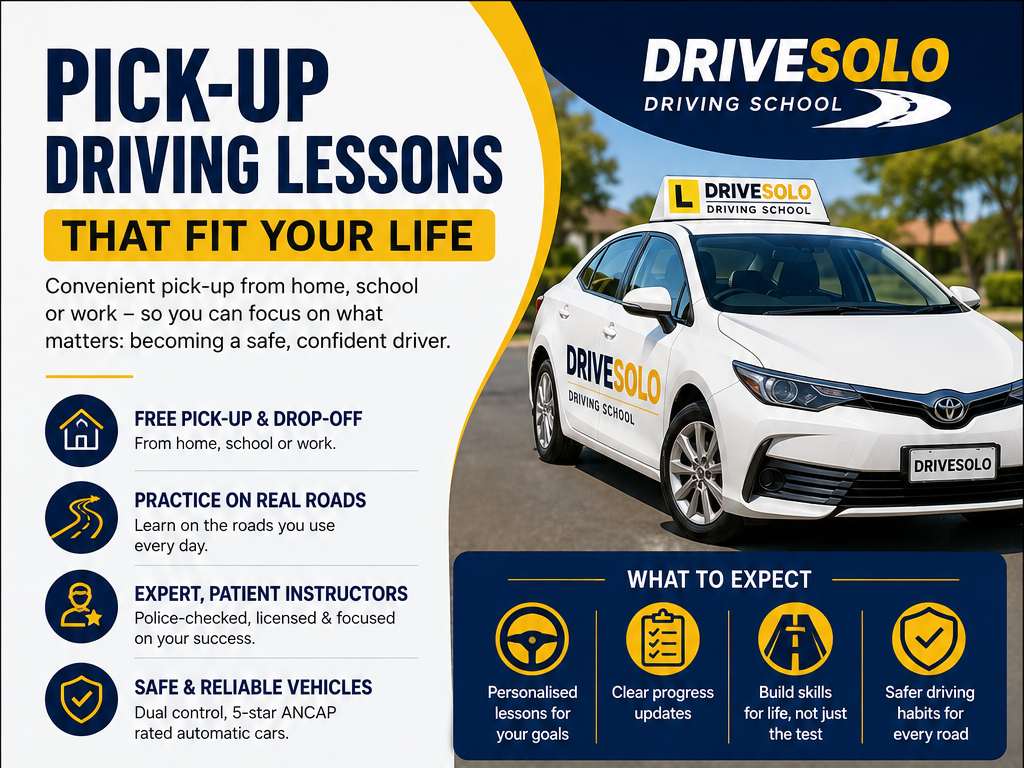
What good driving lessons with pick-up in Perth should include
Pick-up is valuable, but it should never be the main reason for choosing a driving school. A learner needs professional instruction that is current, individual and focused on safety beyond the Practical Driving Assessment.
A properly equipped training vehicle
Learning in a dual-control vehicle gives both the learner and their family greater reassurance. The instructor can intervene if a serious risk develops, while the learner still gains the experience of making decisions under calm supervision. A modern, fully insured, 5-star ANCAP-rated automatic vehicle also gives learners a safe, reliable environment in which to concentrate on the road.
Automatic lessons suit many Perth learners because they allow more attention to be placed on scanning, speed control, positioning and hazards rather than gear changes. That does not make the driving standard easier. It means the available attention can be directed towards the skills that prevent crashes.
Instructors who correct the cause, not just the symptom
A learner may be told they are braking too late, turning too wide or missing hazards. Useful instruction goes further by explaining why it is happening and what to do differently next time.
For example, late braking may come from looking only at the car in front instead of looking well ahead. A wide turn may be caused by approaching too quickly, poor lane position or turning the wheel too early. When the cause is clear, the learner has a practical correction they can repeat independently.
Look for police-checked, licensed instructors who understand current Western Australian road rules and PDA expectations. Patient coaching is not simply being nice. It is observing accurately, giving timely feedback and creating enough repetition for a safer response to become automatic.
A clear record of progress
A learner should not have to guess whether they are ready for their test. Progress reports give learners and parents a clearer picture of what has been covered, what is improving and which areas need more practice.
This is particularly helpful when a parent or sibling is also supervising drives. Informal practice remains valuable, but it works best when everyone understands the same safe techniques. A progress record can guide home practice towards specific skills, such as parallel parking, judging gaps, entering roundabouts or maintaining a safe following distance.
Formal lessons and family practice work best together
Many parents teach their teenagers to drive well. They bring local knowledge, encouragement and valuable extra time behind the wheel. The trade-off is that it can be difficult for a parent to watch traffic, monitor the learner and explain a mistake at the exact moment it happens.
Experienced instructors are trained to do this while remaining calm and safety-focused. They can also identify habits that have become normal over years of driving but do not meet current road rules or assessment standards. This is not about criticising parents. It is about giving learners an independent coach and a safer structure for building experience.
The strongest approach is usually a combination: professional lessons to introduce and correct techniques, followed by regular supervised practice to make those techniques familiar. A learner who only drives immediately before lessons may progress more slowly than one who practises the instructor’s feedback between sessions.
Preparing for the WA Practical Driving Assessment
The PDA assesses much more than whether a learner can move the car, park and follow directions. Assessors are looking for safe, legal and controlled driving throughout the test. That includes observation, speed choice, road position, gap selection, signalling, responding to hazards and completing manoeuvres safely.
Test preparation should therefore not be a last-minute tour of likely roads. Learners need to understand the standard expected and practise making sound decisions in unfamiliar situations. Routes can change, traffic conditions vary and nerves can affect concentration. A learner who has been taught only to memorise a route may struggle when something unexpected happens.
A quality test-day service can reduce avoidable pressure. It may include a warm-up lesson, use of the driving school vehicle for the assessment, transport arrangements and insurance cover. The warm-up is especially useful because it lets the instructor settle nerves, check key routines and address any issue that needs immediate attention before the assessment begins.
No responsible instructor should promise that every learner will pass first go. The goal is to present for the PDA when the learner can drive safely and consistently, not simply when a test appointment is available.
Questions to ask before booking
Before choosing lessons, ask whether the price is fully inclusive and whether pick-up and drop-off are included. Confirm the lesson length, whether weekday, weekend and night bookings are available, and whether the vehicle has dual controls and appropriate insurance.
It is also worth asking how the instructor tracks progress and whether they provide practical feedback after each lesson. If you are booking for your teenager, ask how you will know what to practise between sessions. These questions help separate a basic car hire arrangement from genuine driving education.
At Drive Solo, 60-minute automatic lessons include free home, school or workplace pick-up and drop-off, with transparent all-inclusive pricing from $80. The focus is not on rushing learners through a checklist. It is on identifying the small decisions that shape safe driving for years after the licence is issued.
Choose convenience that supports safer driving
The best pick-up service saves time without reducing standards. It gives learners a dependable way to train around their commitments, while giving parents confidence that their child is learning in a properly equipped vehicle with a qualified instructor.
A licence is an important milestone, but safe judgement is what protects a new driver once they are alone. Choose lessons that make practice easier to attend, feedback easier to understand and every drive a step towards confident, responsible independence.
Ready to get on the road? Check out our driving lesson prices and packages in Perth and book your first lesson with Drive Solo today.
