The difference between a cheap lesson and a valuable one can be the moment your child learns to check properly at a busy roundabout, corrects a late brake, or handles an unexpected hazard calmly. So, how much do automatic driving lessons cost? In Perth, a professional 60-minute automatic lesson commonly sits around the $70 to $100 mark, with the final price depending on what is included, when the lesson is booked and the instructor’s experience.
At Drive Solo, 60-minute lessons start from $80 with transparent, all-inclusive pricing. That includes free pick-up and drop-off from home, school or work in serviced Perth suburbs, so learners and parents are not left trying to arrange extra transport around every booking.
The better question is not simply, “What is the lowest hourly rate?” It is, “What support does this lesson give me to become a safer, more confident driver and prepare properly for the WA Practical Driving Assessment?”
How much do automatic driving lessons cost in Perth?
For most learners, budgeting $80 to $100 for a one-hour automatic driving lesson is a sensible starting point. Some instructors advertise lower prices, particularly for shorter sessions or special offers. Others charge more where lessons include evening availability, specialist assessment preparation, high-demand locations or premium test-day support.
A price should be easy to understand before you book. Check whether it covers the full 60 minutes of driving tuition, the instructor’s time, use of an insured training vehicle and pick-up or drop-off. A lower advertised figure is less useful if it excludes the practical things your learner needs to get behind the wheel safely.
Automatic lessons can be particularly appealing for busy students, adult learners and people new to Western Australian road rules. Without a clutch and gear changes to manage, learners can put more early attention into observation, speed control, positioning, gap selection and responding to other road users. That does not make automatic driving effortless – it simply changes where the learning focus sits.
What affects the cost of automatic driving lessons?
Lesson rates are shaped by much more than the time shown on the clock. A professional instructor carries the cost of a well-maintained vehicle, commercial insurance, fuel, licensing, ongoing training and the systems needed to provide reliable bookings and learner records. Those costs help create a safer teaching environment than an informal drive in the family car.
The vehicle matters. A purpose-built training car with dual controls lets an instructor intervene if a learner misjudges a hazard or loses control. A modern, 5-star ANCAP-rated vehicle also gives learners a safer place to practise unfamiliar situations, from peak-hour traffic to reversing into a bay.
Availability can affect value too. A lesson after school, on a weekend or at night may be the only realistic option for a learner balancing classes, work or family commitments. Night lessons are not just convenient. They allow drivers to experience reduced visibility, headlight glare and different traffic conditions before they are alone on the road.
Location also plays a part. In areas across Cockburn, Fremantle, Rockingham, Kwinana, Armadale and Cannington, free pick-up and drop-off can remove a genuine barrier to regular practice. It saves parents a separate trip and means the paid lesson time is focused on driving rather than figuring out how to get to an instructor’s meeting point.
Finally, there is the instructor’s standard. A licensed, police-checked instructor who understands current WA road rules and PDA requirements is not simply taking a learner for a drive. They should be observing closely, identifying the cause of an error and teaching a correction the learner can repeat independently.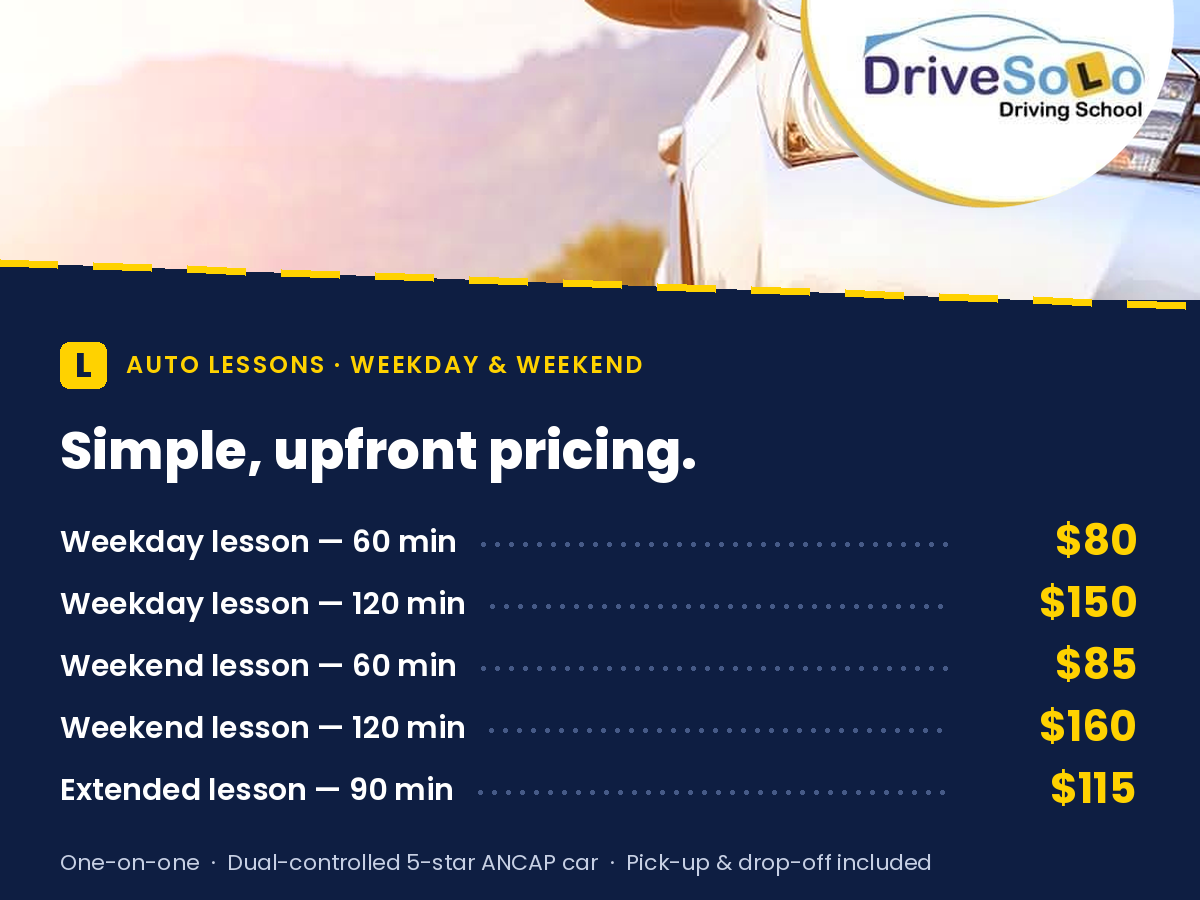
What should be included in the lesson price?
A driving lesson is most useful when its inclusions are clear. At minimum, learners should know the length of the session, whether vehicle use is included and whether there are additional travel, booking or weekend fees.
Quality instruction should also give the learner a clear sense of progress. One lesson might focus on scanning at intersections and choosing safe gaps. The next may build on that with lane changes, roundabouts, parking or higher-speed roads. Progress reports help learners, parents and instructors see what has improved, what still needs practice and whether the learner is approaching test readiness.
Look for an instructor who gives specific feedback rather than vague reassurance. “Be more careful” does not tell a learner what to do differently. Useful coaching explains the action and the reason: check mirrors early, signal before moving position, slow down before the turn, and look through the direction of travel. These are the habits that support both a PDA pass and safer driving long after the test.
Packages can lower the per-lesson cost – but only if they suit the learner
Many driving schools offer lesson packages. Buying several lessons together can reduce the cost per session and encourage consistent practice, which is often where real confidence develops. Regular lessons also let one instructor build on previous feedback instead of starting from scratch each time.
Packages are not automatically the best choice for every learner. A teenager who is already getting calm, structured supervised practice at home may only need professional lessons to correct particular habits and prepare for the PDA. An adult learner returning after years away from driving, or someone adapting to Australian conditions, may benefit from a more structured series of sessions.
Before paying upfront, ask how long the package remains valid, whether bookings can be moved, and whether lessons can be tailored as the learner improves. Flexibility matters. Learners progress at different speeds, and a good plan should respond to their actual driving rather than a fixed number of lessons.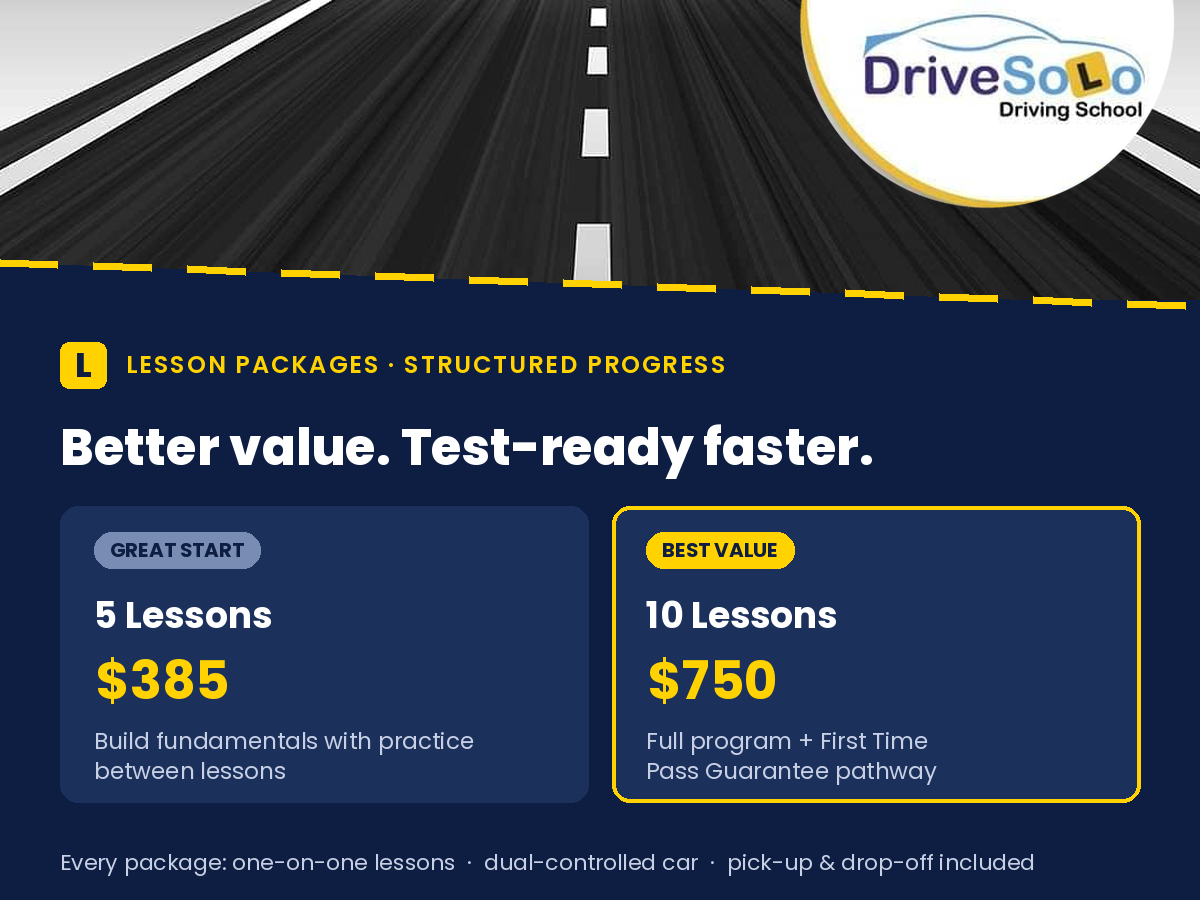
Do test-day costs sit separately from normal lessons?
Usually, yes. Normal driving lessons build skill over time, while a test-day package is designed to make the Practical Driving Assessment day more organised and less stressful. It may include a warm-up lesson, use of the instructor’s automatic vehicle for the assessment, transport arrangements and insurance cover.
This can be worthwhile for learners who have become familiar with their instructor’s car and want to avoid using an unfamiliar vehicle on a high-pressure day. It also gives the instructor time to settle nerves and revisit the specific routines the assessor will be watching for, such as observations, safe head checks, speed management and decision-making at intersections.
However, test-day support cannot replace preparation. Hiring a training vehicle is helpful, but it will not compensate for rushed observation, poor road position or inconsistent control. The strongest approach is to use lessons to build reliable habits well before the assessment date.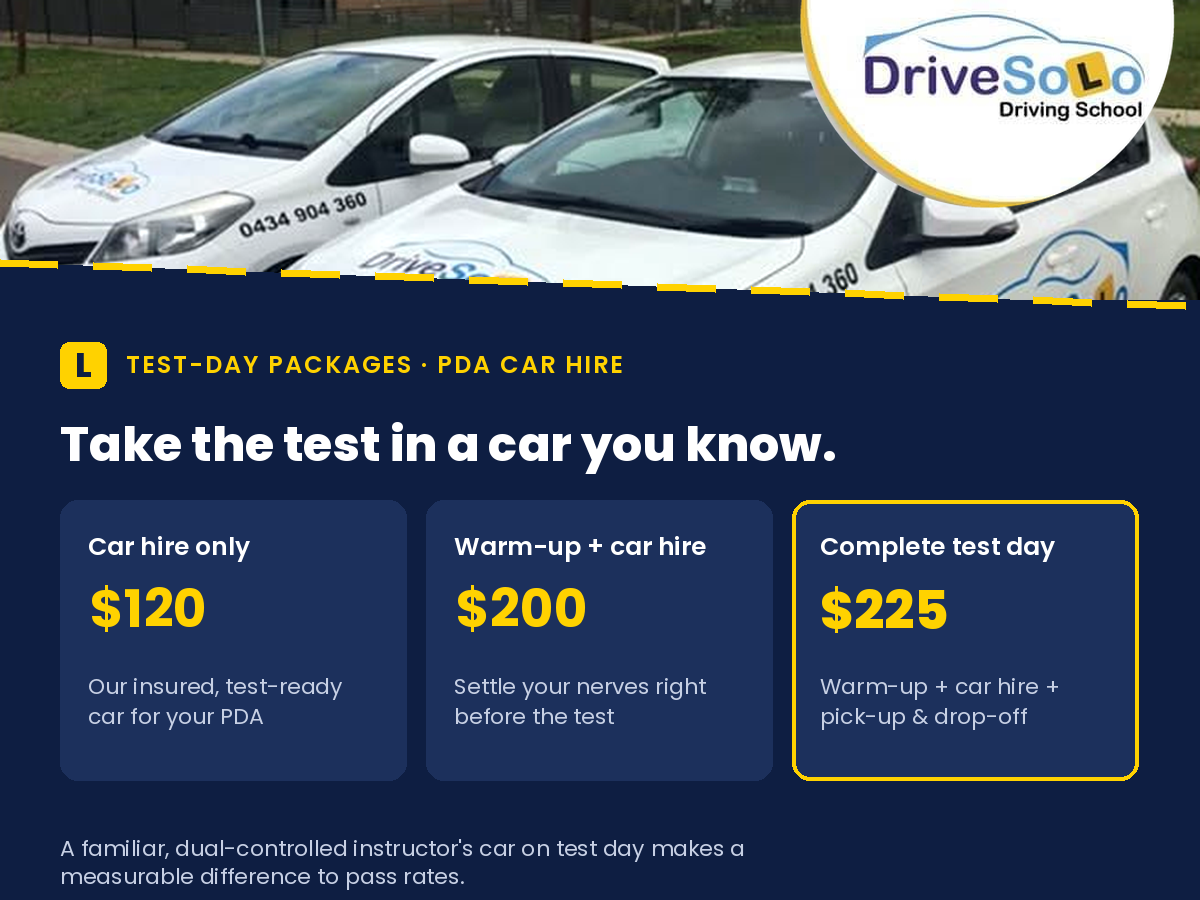
Cheap lessons can cost more when progress stalls
It is understandable to compare prices, especially when parents are paying for lessons alongside registration, fuel and other costs of learning to drive. But the cheapest option can become expensive if lessons are shortened, feedback is unclear, bookings are difficult to secure or a learner needs extra sessions because mistakes were never properly addressed.
Professional instruction is also a safety investment. Parents and siblings can provide valuable supervised practice, but they may not know the latest assessment expectations or recognise every developing habit. They can also find it difficult to stay calm while teaching someone they care about. An experienced instructor brings distance, patience and a method for correcting errors without knocking the learner’s confidence.
A good balance is often professional lessons alongside regular supervised practice. The instructor establishes the right techniques, then the learner repeats them between sessions in different conditions. That repetition turns advice into muscle memory and helps learners arrive at their PDA with fewer surprises.
How to choose value, not just a price
When comparing automatic driving lesson costs, ask whether the rate includes a full hour, a dual-control insured vehicle, qualified instruction, convenient pick-up and clear progress feedback. Check the school’s approach to WA PDA preparation and whether the instructor teaches for long-term safety rather than test-day shortcuts.
The right lesson should leave a learner knowing exactly what they did well, what needs work and how to practise it safely next time. That clarity is worth far more than saving a few dollars on a lesson that simply fills an hour behind the wheel.
Learning to drive is one of the first major responsibilities many young people take on independently. Choose instruction that respects that responsibility, gives families confidence and helps the learner build the calm, repeatable decisions they will need on every road after they pass.