



A missed head check before changing lanes, a late indicator at a roundabout or an L plate hidden behind a dirty rear window can turn an otherwise good drive into a safety risk. Knowing the WA road rules for learner drivers is not about memorising answers for one test. It is about building habits that protect you, your supervisor, passengers and everyone sharing the road.
For learners in Perth, the challenge is that real driving rarely happens on an empty street. You will deal with school-zone traffic, busy roundabouts, merging traffic, cyclists, wet roads and drivers who do not always signal as clearly as they should. The rules set the minimum standard. Safe driving means applying them early, consistently and calmly.
Your learner permit: the rules that apply every drive
A learner driver must carry their learner permit while driving and be supervised by a person who holds a current licence for the class of vehicle being driven. For a car, your supervisor needs to be properly licensed to drive that type of vehicle and have held their licence for the required period.
You must display L plates clearly at the front and rear of the vehicle. They need to be visible, upright and readable from a reasonable distance. Do not place a plate where it is obscured by window tint, a bike rack, a spare wheel, dirt or items in the rear window. It may feel like a small detail, but it tells other road users that you are learning and allows them to give you appropriate space.
Learners are subject to a zero blood alcohol limit. The safest approach is simple: do not drive after drinking alcohol or taking any substance that could affect your judgement, alertness or coordination. Some prescription and over-the-counter medicines can also impair driving, so ask a pharmacist or doctor if you are unsure.
Mobile phone rules are equally straightforward. Do not use a mobile phone while driving, including at traffic lights. Put it away before the car moves. If you need directions, set them up before leaving and use a legal hands-free arrangement only where permitted. Even then, a learner is usually better served by having their supervisor give directions and keeping their attention on traffic.
Speed limits: driving at the limit is not always safe
Learner drivers in WA must not exceed 100 km/h, even where the posted speed limit is higher. That does not mean 100 km/h is automatically the right speed whenever the sign allows it. Rain, glare, roadworks, heavy traffic, poor visibility and unfamiliar roads may all require you to slow down.
In built-up areas, the default speed limit is commonly 50 km/h unless signs say otherwise. But signed limits always take priority. Pay close attention around schools, roadworks, shopping areas and major roads where speed zones can change quickly.
A common learner mistake is focusing only on the speedometer. Good drivers scan ahead for signs, brake lights, pedestrian crossings and traffic conditions, then adjust speed smoothly. This gives you more time to make decisions and helps avoid harsh braking that can unsettle the car behind you.
Keep a safe following distance. The gap should increase in rain, at night, on loose surfaces and whenever visibility is reduced. If you cannot see far enough ahead to stop safely, you are travelling too fast for the conditions, regardless of the posted limit.
WA road rules for learner drivers at intersections and roundabouts
Intersections test observation as much as rule knowledge. At a stop sign, come to a complete stop at the stop line. If there is no line, stop before the crossing or intersection where you can see clearly without blocking pedestrians. Slowing down is not the same as stopping.
At a give way sign, you must give way when required, but do not wait unnecessarily if the intersection is clear. Learn to judge approaching traffic by looking for its speed, distance and likely path, rather than guessing based on a quick glance.
At roundabouts, give way to vehicles already in the roundabout. When turning left, signal left on approach. When turning right or making a U-turn, signal right on approach and then signal left when leaving the roundabout. When going straight ahead, you generally do not signal on approach, but you must signal left as you pass the exit before the one you intend to take, where practical.
This is an area where rushed signalling causes trouble. Your indicator should communicate your intention before you act, not after you have begun turning. Practise roundabouts at quiet times first, then build up to busier local routes. In areas such as Cockburn, Fremantle and Rockingham, that gradual practice can make multi-lane roundabouts far less intimidating.
Lane changes, merging and turning: check, signal, move
The routine for changing lanes is not just a PDA exercise. It is a reliable safety process: check mirrors, indicate for long enough to warn others, check your blind spot, then move only when it is safe. A mirror cannot show every vehicle, motorcycle, bicycle or scooter beside your car.
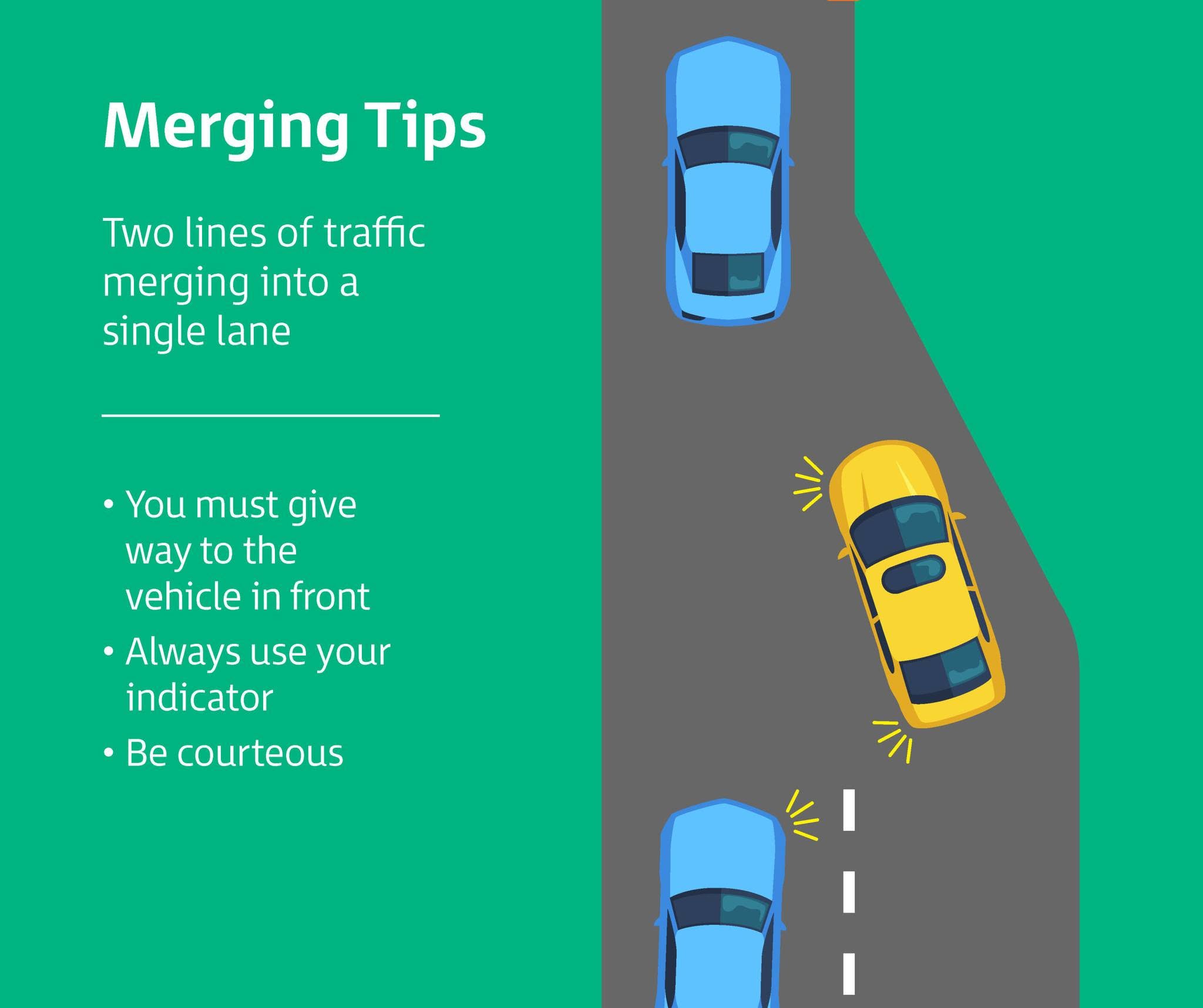
When merging, give way responsibilities depend on the road markings and situation. Do not assume another driver will make room, even if they appear to have space. Match the traffic speed where safe, choose a suitable gap and merge decisively without cutting across another vehicle.
Before turning, position the vehicle correctly and look for pedestrians and cyclists. When turning into a side street, the footpath crossing is part of the turn. Slow down, scan both sides and be ready to give way. This matters especially near schools, shops and train stations, where people can appear from behind parked cars.
At traffic lights, do not enter an intersection unless you can clear it. Green means you may proceed only if the path is safe. When turning right, keep watching for oncoming vehicles, pedestrians crossing and late-moving traffic. Calm patience is safer than forcing a gap.
Build your logbook honestly and use it properly
To progress towards your practical driving assessment, learners need to complete the required supervised driving experience and record it correctly in their logbook. In WA, this includes a minimum number of supervised hours, with a night-driving component. Check the current licensing requirements before planning your final hours, as rules and administrative processes can change.
Do not treat the logbook as paperwork to catch up later. Record each drive accurately while the details are fresh, including the time, conditions and supervising driver. Honest entries help show what experience you have actually gained and reveal gaps in your practice.
A varied logbook is more valuable than repeated short drives on the same quiet streets. Aim to gain supervised experience in different conditions, including:
- suburban streets, busy shopping precincts and higher-speed roads;
- daylight, rain and night driving;
- parking, hill starts, reversing and manoeuvring around tight spaces; and
- roundabouts, lane changes, merging and controlled intersections.
Night driving deserves careful preparation. Reduced visibility changes how early you need to identify hazards and how much distance you need to stop. Keep your windscreen clean, use lights correctly and avoid looking directly at oncoming headlights. A few well-supervised night lessons can build confidence without pushing you beyond your current skill level.
The rules behind a strong PDA drive
The WA Practical Driving Assessment looks for safe, legal and repeatable driving, not a perfect performance with no nerves. Examiners need to see that you observe, respond to hazards, follow directions and control the vehicle without creating risk.
Many learners lose marks not because they do not know a rule, but because they apply it too late. They check a blind spot after moving, signal as the steering wheel turns, approach a stop sign too quickly, or fail to scan through an intersection. These are habits, which means they can be corrected with specific practice.
Professional instruction can be particularly useful when family practice has become repetitive or stressful. A licensed instructor can identify the exact cause of an error, demonstrate the correction and give you a chance to repeat it in a dual-control vehicle. At Drive Solo, progress-focused lessons are designed to turn those corrections into safer automatic habits, rather than simply teaching a route for test day.
Parents and supervisors also play an important role. Give one clear instruction at a time, choose practice locations that match the learner’s ability and leave enough time so nobody feels rushed. If a drive becomes overwhelming, pull over somewhere safe, talk through what happened and try again when the learner is settled.
Keep learning after you pass
Your learner period is the safest time to make mistakes, because a qualified supervisor can intervene and help you understand them. Use every drive to practise looking further ahead, leaving space, communicating clearly and making calm decisions.
The aim is not to scrape through the PDA. It is to become the driver who recognises a developing hazard early enough that nobody else has to brake, swerve or wonder what you are about to do.
Ready to get on the road? Check out our driving lesson prices and packages in Perth and book your first lesson with Drive Solo today.
