


There is a particular kind of quiet in the DVS car park when an assessor walks around a learner’s car, stops at the back, and points at a brake light that is not working. The lesson money is spent. The nerves have been building for a fortnight. And the test is over before anyone has turned a wheel.
It happens more often than you would think, and almost never because of the driving.
If you are taking your own car to your Practical Driving Assessment, the assessor gives it a once-over before you start. Tyres, lights, windscreen, seatbelts, the lot. If something is not up to scratch, the assessment does not go ahead, and you are rebooking and paying for another one.
The good news: the whole check takes about ten minutes in your own driveway, and nearly everything that gets a car knocked back is a cheap fix. Here is how we run through it with our learners.
Start outside the car
Tyres
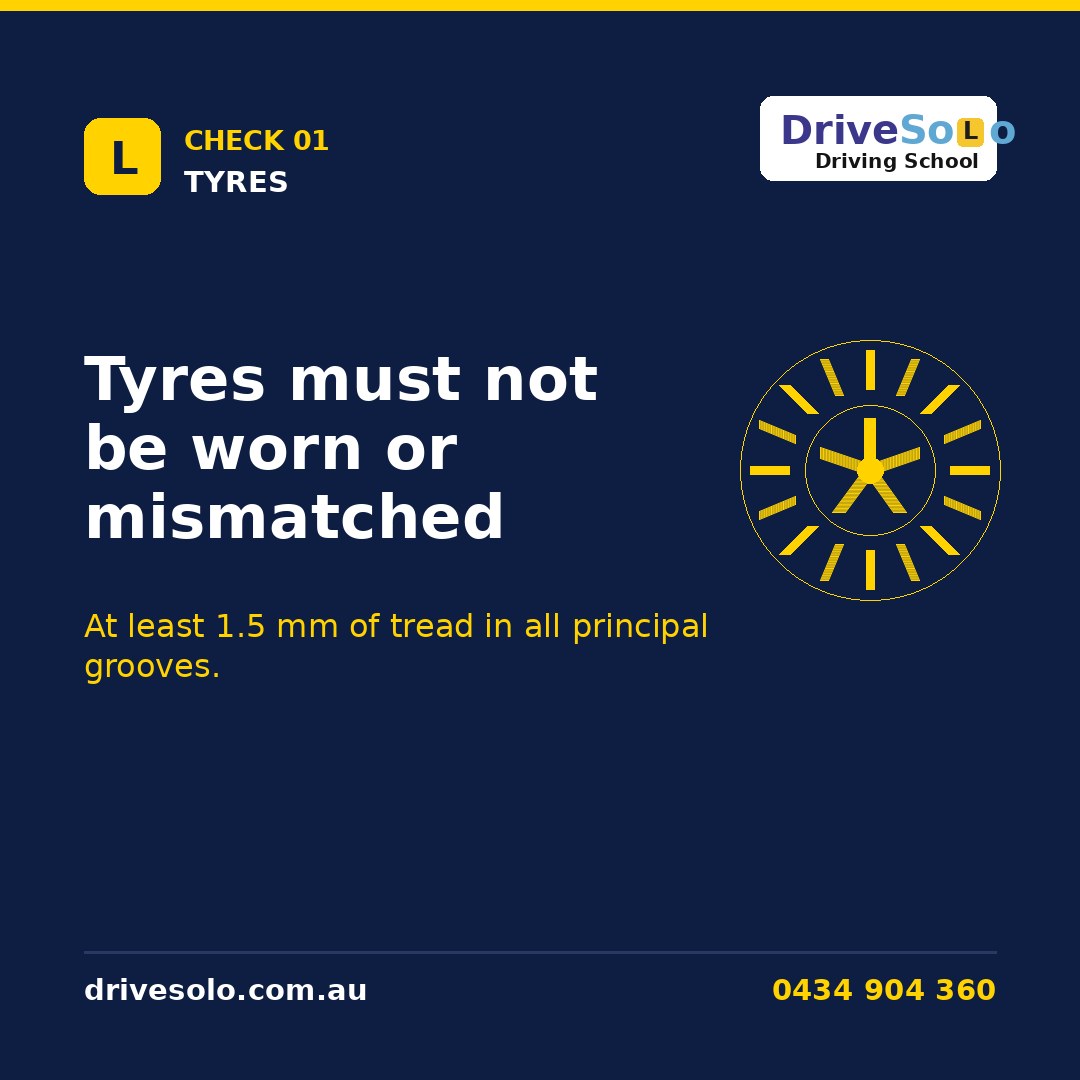
You need at least 1.5 mm of tread right across the tyre, and they have to carry the right speed and load rating for the car. They also need to match each other, with no obvious wear or damage.
That last bit catches people out. If someone has put a different brand or size on one corner after a flat, that can be enough to end the day early.
How to check it: find the little raised bars sitting down in the tread grooves. If the tread has worn level with those bars, the tyre is done. Look at the inside edge too, because that is where they wear first and where nobody ever looks.
Lights
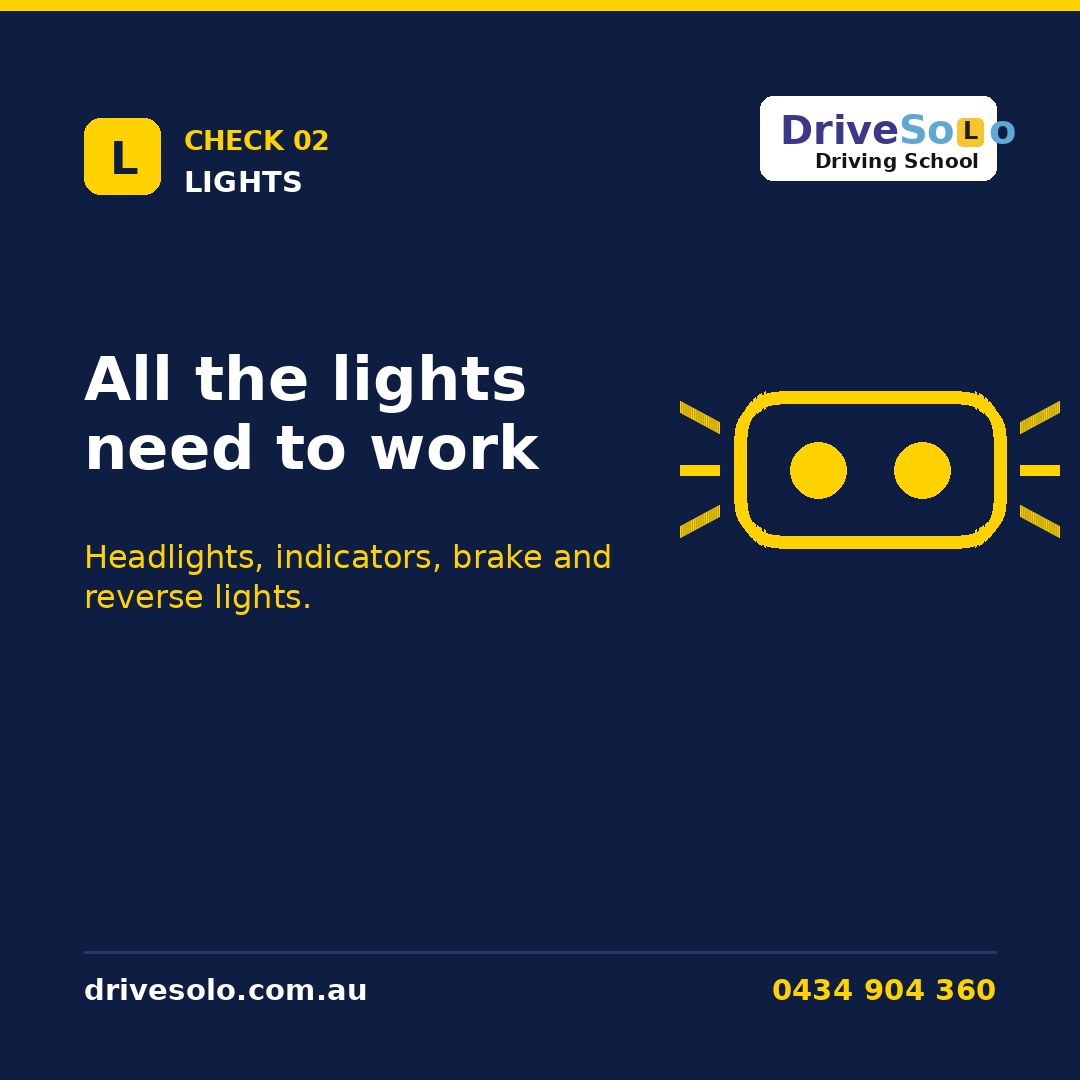
Every light has to work, and the headlights need to be aimed properly. Lenses cannot be cracked or faded, and the reflectors should have barely any rust on them.
How to check it: back up to the garage door or a shop window around dusk and run through the lot. Low beam, high beam, both indicators, hazards, reverse, fog lights. For the brake lights you will want someone to stand behind the car, or use the reflection.
A blown brake light globe is the single most common reason a car gets turned away. It is a ten dollar part.
Windscreen and wipers
No crack longer than 15 cm, and nothing at all in the driver’s line of sight. A chipped or stone-crazed windscreen in the wiper area is a problem.
The wipers and washers have to work and actually clear the glass. Give the washers a squirt before test day, not just the wipers. A dry washer bottle in a Perth summer is easy to forget about.
Then have a look inside
Mirrors
Interior and exterior mirrors need to be fitted and adjusted to give you the widest view. If the rear-view has been knocked loose or a mirror housing is cracked and flapping about, sort it before the day.
Seatbelts
They have to work properly, with no fraying, twisting or damage.
How to check it: pull each belt all the way out and feed it back slowly, watching for frayed edges and twists near the anchor point. Make sure each one clicks in and releases cleanly. Do the back seats as well, even though nobody is sitting there.
Windows

All of them have to open and close. That includes the rear windows. If one has been playing up for months, now is the time.
Horn, demister, air con, speedo
The horn, demister, door handles and speedometer all have to work. The pedals need their non-slip covers, and the head restraints need to be fitted.
Worth doing the air con properly too. A forty minute assessment in a hot car with no cold air is miserable for both of you, and it does not help you think straight.
Park brake
It has to hold the car on a slope, and in a car it needs to be centrally mounted so the assessor can reach it. Dual-control instructor cars are exempt from that one.
Last look at the dash
No red or amber engine warning lights showing. And here is the one that really stings: that includes the low fuel light.
We have seen a perfectly good car knocked back because the fuel light came on while sitting in the queue. Fill up the day before. Not on the way, not at the servo around the corner. The day before.
If a genuine warning light is on, whether that is the engine, airbag, ABS or oil, get it looked at well before your test date. Some fixes need parts, and parts take time.
Give the cabin a tidy
The car needs to be reasonably clean inside and out, with loose objects secured. Nobody is expecting a full detail. They are expecting no drink bottles rolling under the pedals and no gear sliding around the back seat.
Clear the footwells and the back shelf, and make sure the front passenger seat is empty and can be adjusted. That is where your assessor is sitting.
Two things people get wrong
Your L plates come off. You need them on to drive to the centre, but they have to be removed for the assessment itself. Take them off in the car park and put them in the boot.
Takata airbags and recalls. A car under a recall, or fitted with Takata airbags, cannot be used. If you are not sure about an older family car, check it before you book, not the night before.
If you are borrowing Mum and Dad’s car
Do not assume that because it gets driven every day it is ready for an assessment. The things on this list are easy to stop noticing in a car you drive all the time. A cracked windscreen becomes background furniture after a few months.
Take it for a proper practice drive first. Adjust the seat and mirrors yourself, find the indicators and the demister without looking, and get a feel for how the brakes bite. Every car is different, and test day is not when you want to be hunting for the wiper stalk.
Or use ours
A dual-control instructor car is already set up to meet the standard, so there is nothing to worry about on the morning. You also sit the test in the car you learnt in, with the same mirrors, the same biting point and the same width through a gap.
Most of our learners book a pre-test lesson on the roads around their centre, then go straight into the assessment. It settles the nerves and irons out anything rusty while there is still time to fix it.
We run lessons and tests out of Success, Cannington, City West, Kelmscott and Rockingham.
The night before, in order
- Fill the tank.
- Walk around the car: tyres, lights, windscreen.
- Check seatbelts, windows, wipers, washers, horn, demister.
- Clear the footwells and the passenger seat.
- In the morning: L plates off, check the dash is clear, leave early.
Ten minutes. It is the cheapest insurance you will ever buy on a driving test.
Check it yourself
Rules do change, so it is always worth reading the official list before your test. The full requirements are on the Department of Transport vehicle standard page, and we have written up the complete set in PDA vehicle requirements WA. More help for learners is on our learner resources page.
Need a hand before your test?
Give us a ring on 0434 904 360 and we will sort out a pre-test lesson, or the car itself if you need one.
Safe Drivers. Safer Community.
Last checked against the Department of Transport vehicle standard on 17 November 2026.
